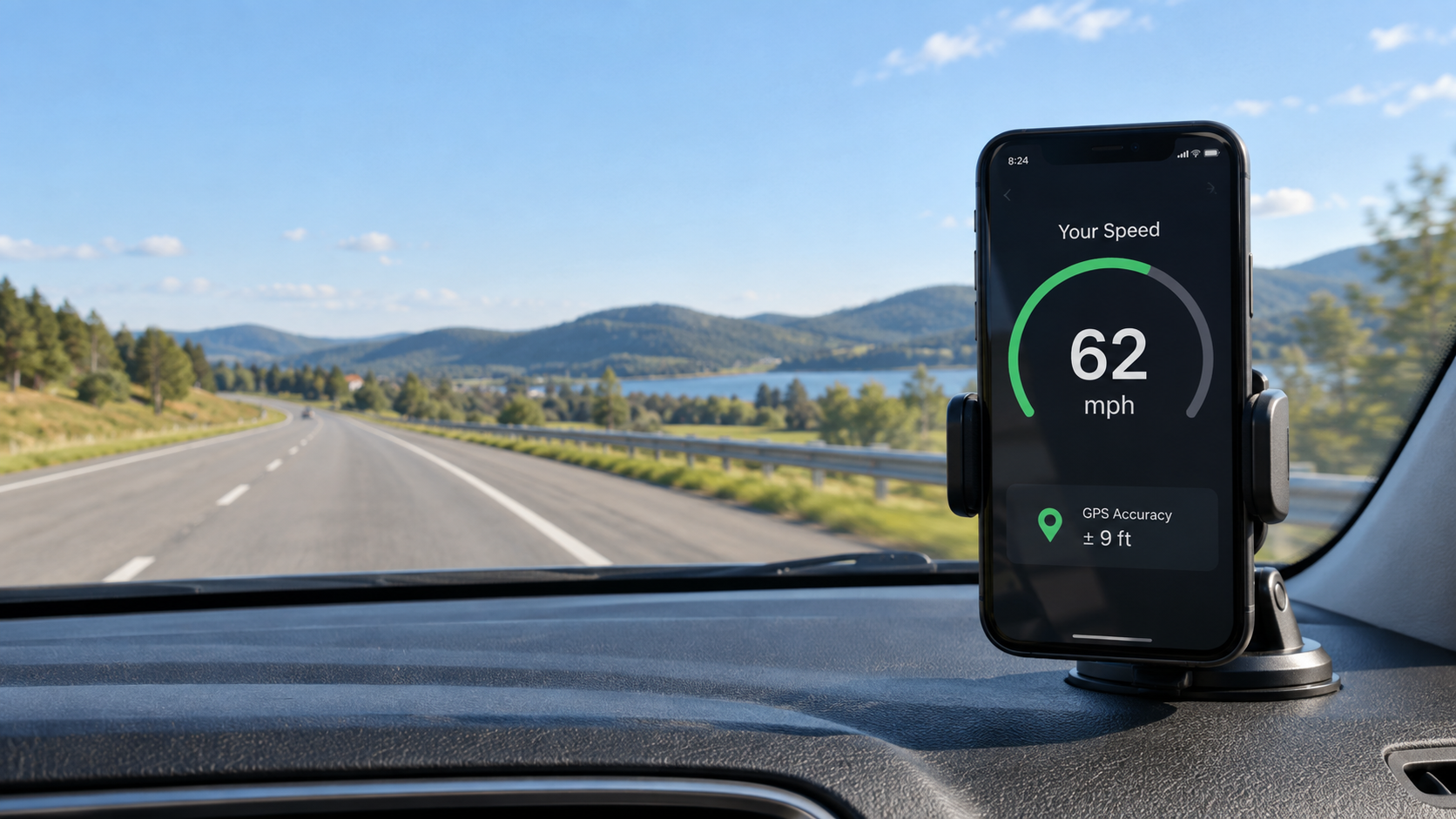
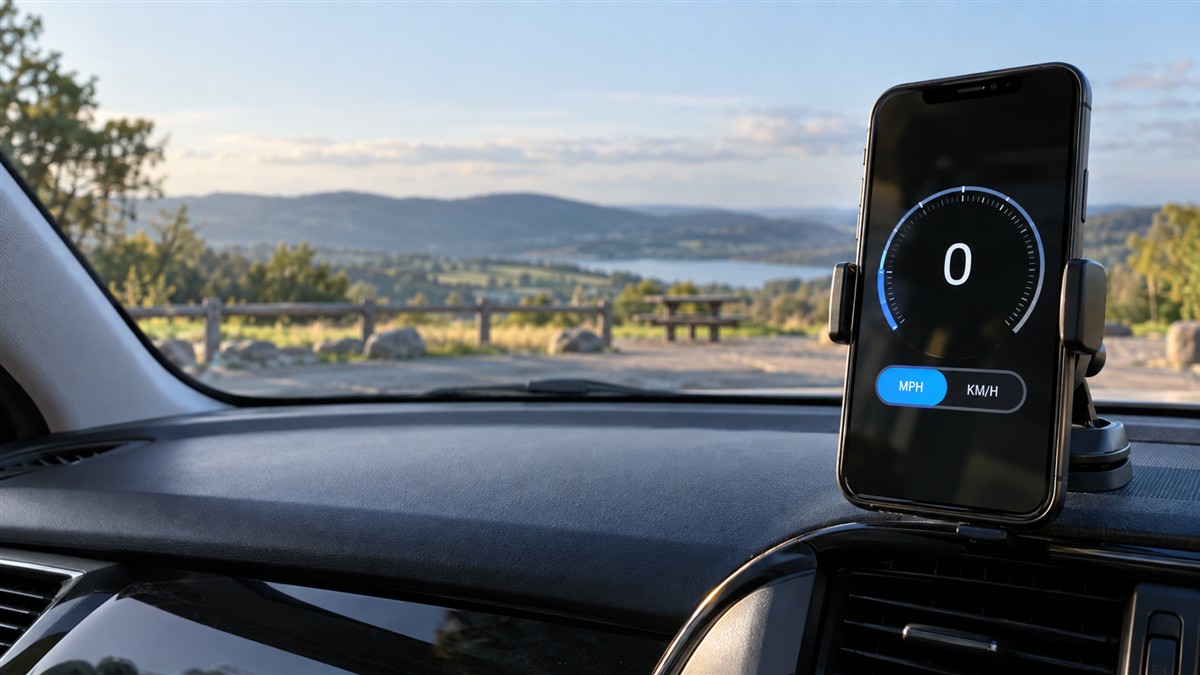
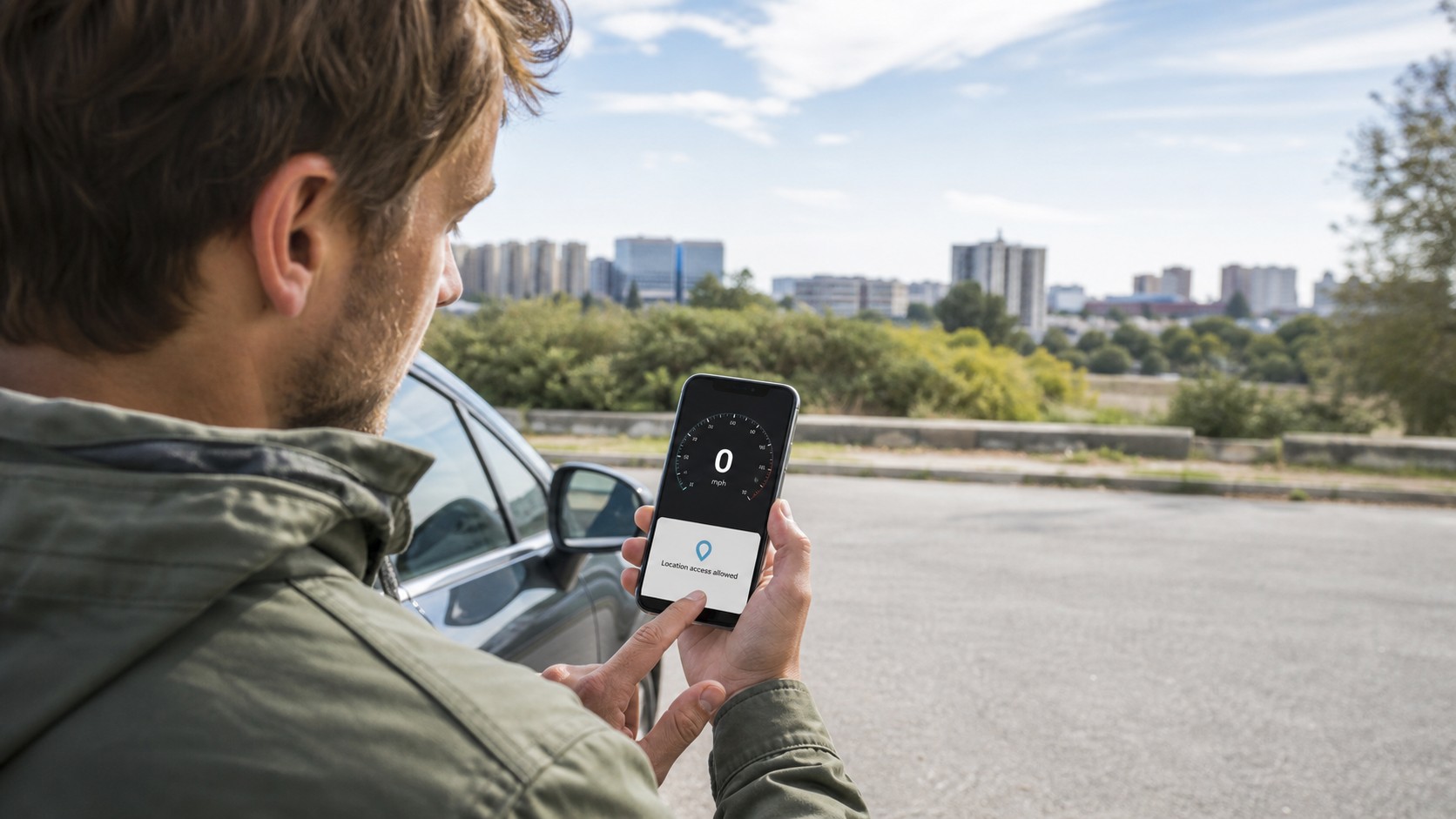
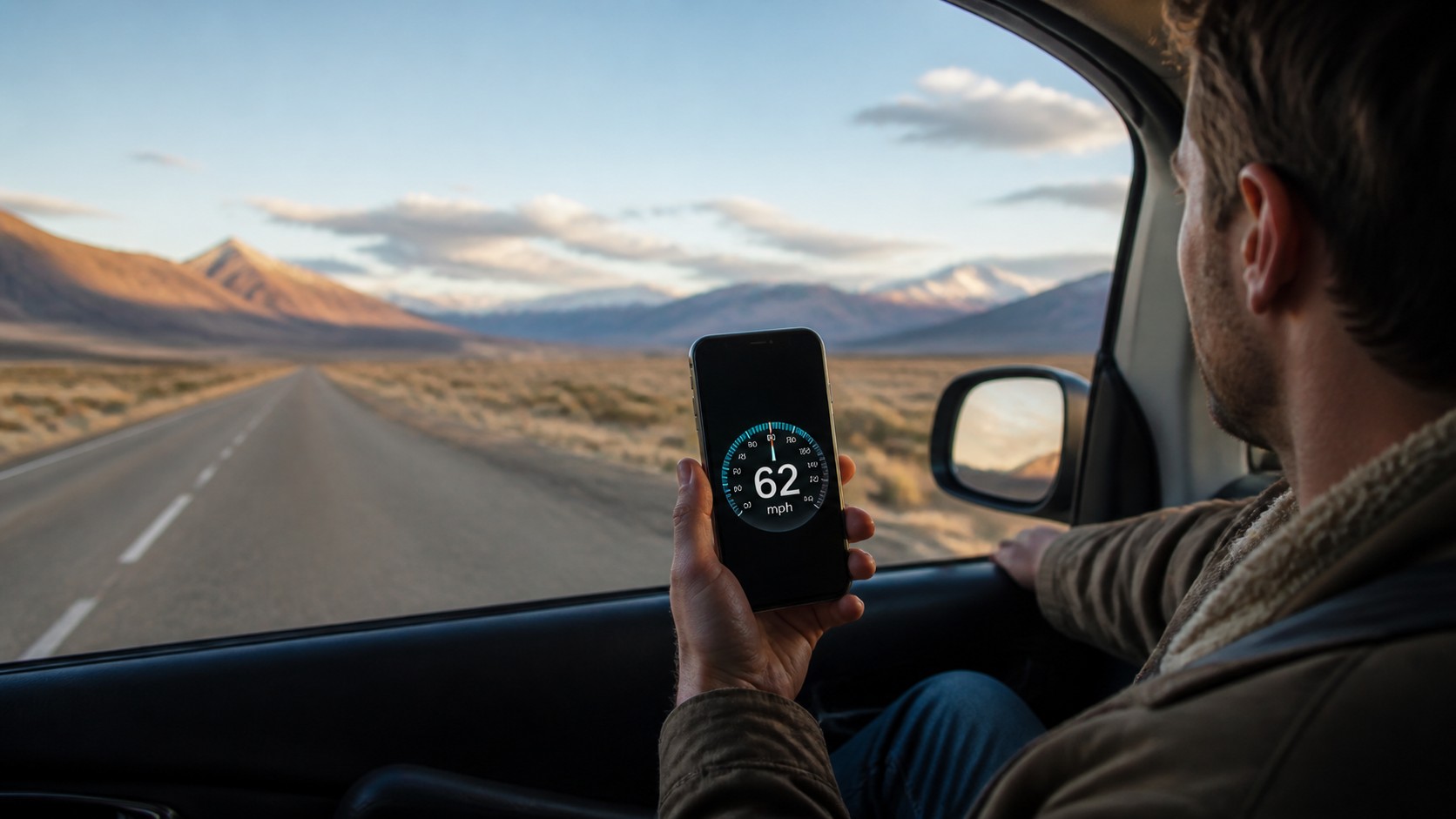
Have you ever glanced at your phone while driving and wondered if that digital number is more reliable than the one on your dashboard? You're not alone. Online GPS speedometers have become a go-to tool for many drivers, cyclists, and even runners. The best part? You don't need to download a clunky app or install any hardware—just open a website, grant location access, and you're set. Just remember, any tool that takes your eyes off the road should be used with caution. Always prioritize safety and follow local traffic laws over checking your exact speed on a screen.
How Does a GPS Speedometer Work?
At its core, a GPS speedometer is a clever piece of technology that relies on a network of satellites orbiting our planet. Instead of relying on physical sensors that measure how fast your wheels are turning, it figures out your speed by tracking your location over time.
Think of it like this: your device talks to several GPS satellites to pinpoint exactly where you are. It does this multiple times a second. By calculating the distance between those points and dividing it by the time it took to cover that distance, it gets your speed. The math is simple: Speed is just Distance divided by Time.
For instance, if your phone sees you've moved 100 meters in 5 seconds, it knows you're traveling at about 20 meters per second, which is roughly 72 km/h.
What makes modern devices even better is that they rarely use just GPS. They often combine signals from different satellite systems like GLONASS (Russia), Galileo (Europe), and BeiDou (China). This hybrid approach, which sometimes also uses Wi-Fi positioning and mobile network data, gives a much more stable and reliable reading, especially in crowded cities where tall buildings can interfere with signals.
GPS Speedometer Accuracy in Different Conditions
The accuracy of a GPS speedometer isn't fixed. It really depends on your environment and how clear the signal is. Under a clear blue sky, your smartphone can be surprisingly precise.
| Environment | Typical Accuracy | Reliability |
|---|---|---|
| Open highway | ±0.5–1 km/h | Excellent |
| Urban streets | ±1–3 km/h | Very Good |
| Dense city with tall buildings | ±3–6 km/h | Moderate |
| Forest or mountainous areas | ±2–5 km/h | Good |
| Tunnels | No GPS signal | Poor |
| Heavy storms | Slightly reduced | Good |
On an open highway, a GPS speedometer is often considered more accurate than the one in your car. That's because it measures your true ground speed, while traditional speedometers estimate speed based on wheel rotation, which can be affected by tire pressure and wear.
In a city with skyscrapers, you might notice the GPS speed wobble a bit. This is the "urban canyon" effect, where signals bounce off buildings. Similarly, driving through a tunnel or parking garage is a dead zone. The signal will just drop out. Weather like heavy rain or snow can sometimes weaken the signal, but for the most part, it won't cause major issues.
GPS Speedometer vs Traditional Speedometer
Both methods have their pros and cons. Knowing the difference can help you decide which one to trust in a given situation.
| GPS Speedometer | Traditional Speedometer |
|---|---|
| ✅ No wheel sensors required | ✅ Instant real-time response |
| ✅ Works in almost any vehicle | ✅ Works without satellite signals |
| ✅ Very accurate at constant high speeds | ✅ Reliable in tunnels |
| ❌ Depends on GPS signal quality | ❌ Can require calibration |
| ❌ Small delay (0.5–1 second) | ❌ Can overestimate speed |
| ❌ Doesn't work underground | ❌ Tire size affects accuracy |
One interesting thing about traditional car speedometers is that they're often designed to read a little higher than your actual speed. Car manufacturers do this to comply with safety regulations. For this reason, the GPS reading on your phone is often considered a more accurate representation of how fast you're *actually* moving.
What Affects GPS Speedometer Accuracy?
A few different factors can influence how accurate your GPS reading is. Let's break them down.
1. Number of Visible Satellites
This is the most basic factor. The more satellites your phone can "see" and connect to, the better it can calculate your position. Most modern devices work best when they have a lock on at least eight satellites.
2. GPS Hardware Quality
Not all smartphones are created equal. A flagship phone will generally have a better GPS receiver and antenna than an older or budget model. Dedicated, high-end GPS units can offer even more precision.
3. Geographic Location
For most of the world, GPS coverage is excellent. However, if you travel to very high latitudes near the North or South Poles, you might experience some degradation in signal quality.
4. Atmospheric Conditions
The satellite signals have to travel through the Earth's atmosphere, specifically the ionosphere. Solar flares or other atmospheric disturbances can cause slight delays or errors in the signal.
5. Device Stability
Think of it like a camera—a shaky hand ruins the picture. If your phone is bouncing around in your cup holder, the speed readings can fluctuate more. Securely mounting your device will give you the most stable and consistent data.
How to Improve GPS Speed Accuracy
Getting the most accurate reading possible is easy. Here are a few practical tips you can follow:
- Use your device outside with a clear view of the sky for the best signal.
- Wait a minute or two after opening the page for your GPS to get a solid lock before you start moving.
- Make sure Airplane Mode is off. This disables the GPS radio.
- Secure your phone in a cradle or mount instead of holding it in your hand.
- Keep your browser and operating system updated for the best performance.
If you're using an online speedometer, a quick page refresh before you head out can also help ensure you're working with fresh location data.
Frequently Asked Questions
Is a GPS speedometer more accurate than my car's speedometer?
Usually, yes. It shows your actual ground speed based on satellite data, while car speedometers tend to read slightly higher.
Does GPS work without an internet connection?
Yes, the GPS signal itself is independent of the internet. However, a website might need a connection to load the page initially.
Can GPS speedometers be used for speeding tickets?
No. Speed limits are enforced using calibrated, certified equipment. A phone app is for information and recreational use only.
Why does my GPS speed change slightly?
Small fluctuations of 1-2 km/h are totally normal. They happen because of changes in satellite geometry, signal quality, and the environment you're in.
Conclusion
In the end, a modern GPS speedometer is a fantastic tool for everyday use. Whether you're driving, cycling, or just curious, it provides reliable data. In ideal conditions, it's often more accurate than the speedometer in your car. Just remember that it has limitations—it won't work in tunnels and relies on a clear satellite signal. For legal purposes, always trust your vehicle's instruments and be aware of the speed limits around you.
Looking for a tool tailored to your specific ride? Try our dedicated Car Speedometer, Motorcycle Speedometer, and Bike Speedometer pages for optimized real-time speed tracking.